

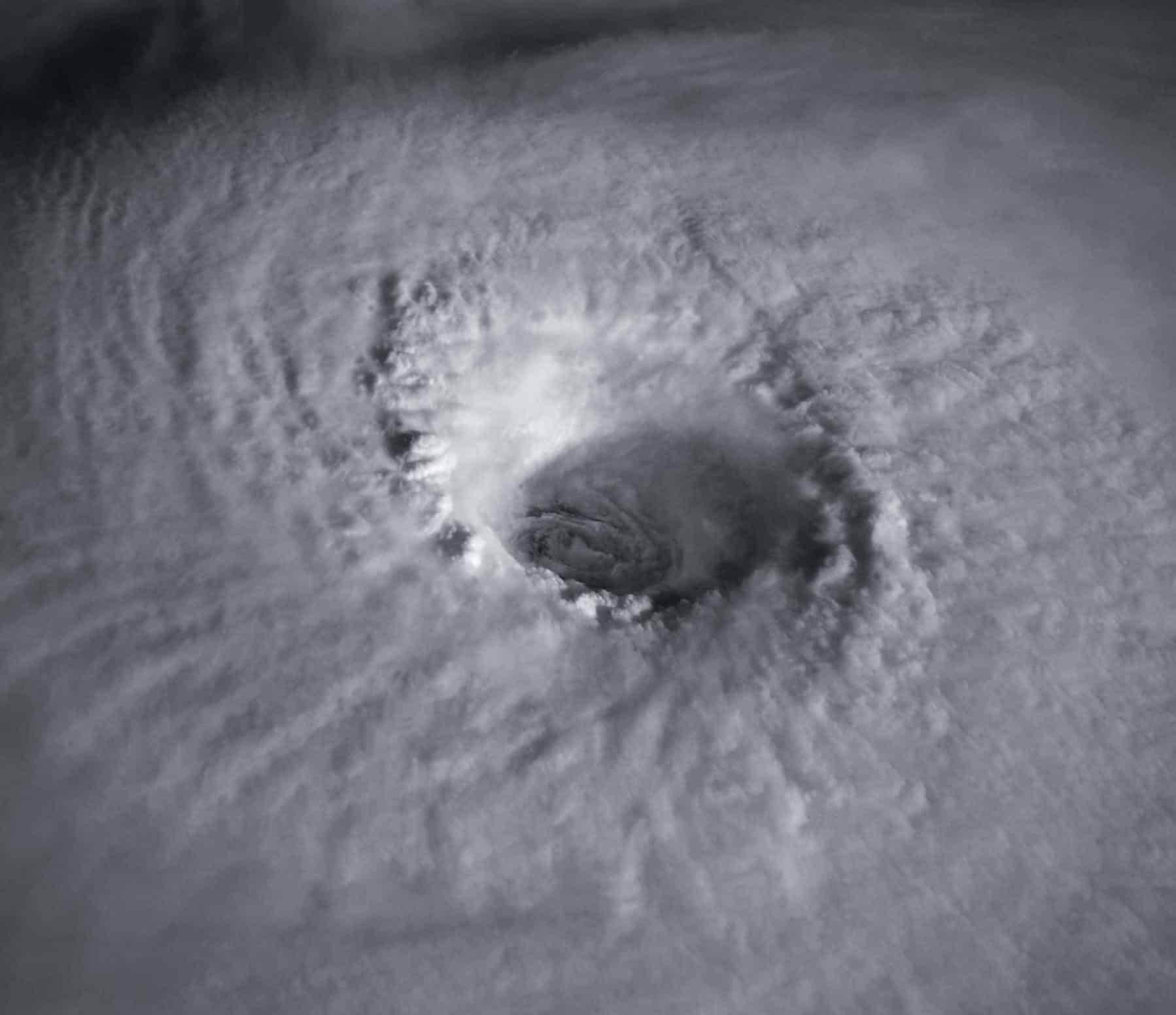
August 31, 2005: The Day Katrina Redefined Mississippi

She moved through towns and neighborhoods with a fury that words fail to contain. What she left behind was not just ruin but a reminder of human endurance.
The Sound Before the Silence
Before anyone saw her, they heard her. Winds tore across the Gulf, bending walls, snapping trees, and sending objects skittering like shards of glass. Pressure shifts rattled ears and doors, carrying the roar of something alive and indifferent.
When the eye reached the coast, the pause it brought was more haunting than the storm itself. The sky fractured into shades of gray. The wind stopped. Silence spread. Not relief.
Only the hollow sensation of a world waiting for the next blow. Survivors stepped outside to find streets frozen between ruin and survival. Then the storm’s second wall struck, twice as fierce. Roofs gave way. Pine forests snapped and fell. Debris became projectiles.
When Katrina finally pushed inland, she left behind an emptiness so profound that it seemed she had stolen sound itself from the coast (Knabb, Rhome, & Brown, 2005).
Mississippi’s Wall of Water
Katrina’s deadliest instrument was not wind, but water. By late morning on August 29, the Gulf had climbed against the land. In Bay St. Louis, the surge reached near twenty-eight feet—higher than any U.S. record to that point (USGS, 2005). Whole neighborhoods disappeared under its weight. Barges broke free and bulldozed their way inland. In Biloxi, floating casinos were swept across Highway 90, crushing what remained in their paths. Winds reached far inland as well. Jackson, more than 150 miles from the coast, lost trees and power lines, leaving 1.7 million without electricity (FEMA, 2006). Roads became impassable, and communications collapsed.
*She decimated not just Mississippi, but Louisiana and Alabama too. Katrina’s winds raged and battered areas like Biloxi for upwards of 17 hours, resulting in a total estimated 7.4 billion dollars worth of damage.
Greg Baker, a shrimper, mounted his four-wheeler with a chainsaw strapped to the back. He cut through fallen oaks and power lines, pushing toward the shoreline. Train cars lay scattered, fish flopped in roadside ditches. Streets once filled with homes had vanished, leaving only concrete slabs and piles of lumber. The “Katrina Smell” was slowly setting in, only hours after Katrina unleashed her pure wrath. Her wrath was so extensive that the very soil still holds her perfume. The smell of decay, fish, and salt is “…still able to be smelled if you dig far enough in the dirt”, Greg remembered. “It’s not a smell that’s easy to forget”.
A View from Above
In Jackson, Robert Latham, then director of the Mississippi Emergency Management Agency, understood before most that the coast would speak only in silence once Katrina passed. Phones were dead, radios cut, roads splintered into fragments. Entire communities had been severed from the rest of the state.
With no other way to gauge the damage, he turned to the sky. From his helicopter, the Gulf Coast looked unrecognizable. Where neighborhoods and highways once threaded together, there stretched only a wasteland of splintered wood and flooded streets. It was not until the Beau Rivage casino marquee came into view that he knew his bearings. Whole towns had simply been wiped from the map. The scale of destruction defied imagination, rivaling even the devastation recorded after Camille in 1969.
During the storm itself, reports had reached him that revealed Katrina’s raw power. “We had a buoy measuring the size of the waves,” Latham recalled. “It got up to fifty feet, and then we stopped receiving data. The buoy had snapped.” Those waves drove the storm surge that would define Katrina in Mississippi, walls of water that erased entire blocks in minutes, leaving behind only concrete slabs and memories.
What followed tested both leadership and endurance. Latham speaks of the aftermath not in terms of despair, but of duty. His team, seasoned and unflinching, moved quickly through the chaos. Protocols were followed, decisions made, and relief set in motion. He remembers clearly the toll: 238 lives lost, more than 200,000 displaced from their homes. Yet even in recalling such figures, he underscores not just the tragedy but the grit of Mississippians. What stood out most was their refusal to collapse under the weight of loss. In his words, their resilience was as steady as the land itself, a quality born from generations who had faced hurricanes before and knew recovery began the moment the winds died.
Pure Wrath and Pure Resilience
![Hurricane Katrina] Gulfport, MS., 9/19/2005 -- Aerial view of damaged and destroyed businesses and homes along the coast in the Biloxi/Gulfport area following Hurricane Katrina. Andrea Booher/FEMA - PICRYL - Public Domain](https://cdn10.picryl.com/photo/2005/09/19/hurricane-katrina-gulfport-ms-9192005-aerial-view-of-damaged-and-destroyed-68c4d9-1024.jpg)
While New Orleans drew the nation’s cameras and headlines, Mississippi shouldered the brute force of Katrina. Entire stretches of the Gulf Coast were flattened, leaving behind the deadliest and costliest natural disaster the state had ever faced(Brinkley, 2006; Mississippi Department of Health, 2006). Yet, in the shadow of this ruin, Mississippians revealed a kind of resilience that seemed cut from an older cloth, raw and unshaken, not unlike what coastal families had shown in the wake of Hurricane Camille in 1969.
For Greg, a lifelong shrimper, the storm’s aftermath was both personal and communal. His memory is stitched with images not often captured on the nightly news. He recalls Black Hawks circling low over the coast, their shadows crossing over shredded rooftops and splintered piers. At first, he hardly registered the cargo tumbling down from the skies. But soon, he saw neighbors gathering MREs, meals ready to eat, distributed not with desperation, but with a quiet order. They were handed from one family to the next, passed along by need rather than hoarded for want.
In the wreckage, small victories carried great weight. A friend of Greg’s stumbled upon his tractor, half-buried in debris. With fuel and hydraulic oil Greg had tucked away for shrimping, they coaxed it back to life. The machine became more than steel and an engine. It was a tool of revival. Street by street, they cleared a path, carving order out of chaos in their neighborhood.
When a church group later asked Greg why he had chosen to stay through the storm, his answer carried no bitterness. “All that you’ve seen is the bad,” he told them. “I wanted to show you the good.” He led them onto his boat, steering through the broken islands that still bore the mark of a proud coast. Off the islands, they drew in redfish in such abundance that a hundred people could eat. Even in the wake of devastation, Mississippi’s waters continued to give.
This was the story too easily overlooked: neighbors helping neighbors, churches and civic groups stepping in where systems faltered, and ordinary people refusing to wait for rescue. The backbone of recovery was built not just by FEMA trucks or government aid (FEMA, 2006; NOAA, 2006), but by hands already hardened by the Gulf’s long history of storms. Katrina may have changed the coastline of Mississippi, but she did not take away Mississippians’ pure resilience. Through each action in the following weeks, months, and years, Mississippians grew stronger, forever carrying Katrina in their souls.
The post When Water Rose and Winds Raged: Katrina Hits Mississippi appeared first on Darkhorse Press.