

Jason Aldean probably wishes that Ashton Pittman wasn’t so dedicated to truth-telling in places that, let’s be honest, most white journalists don’t dare to go.
A bit over a week ago, Ashton noticed the controversy over Aldean’s shocking “Try That In a Small Town” lyrics, which goes much further than glorifying gun culture or using guns for self-defense. The country star’s lyrics applauds “good ole boys” chasing people who are accused of carjacking, robbing a liquor store, burning a flag or cussing out a cop “down the road,” warning “It won’t take long for you to find out.”
Most of the people reading this know this song serves as, purposefully or not, an ode to how lynching was long used to terrorize Black people, using often-trumped-up excuses to execute them before they had a chance to go to trial. Vigilante violence is as un-American as you can get even if a person is guilty, but it’s not yet proved in a fair trial–of which there weren’t many for Black people in lynching’s heydey, with help or support of law enforcement.
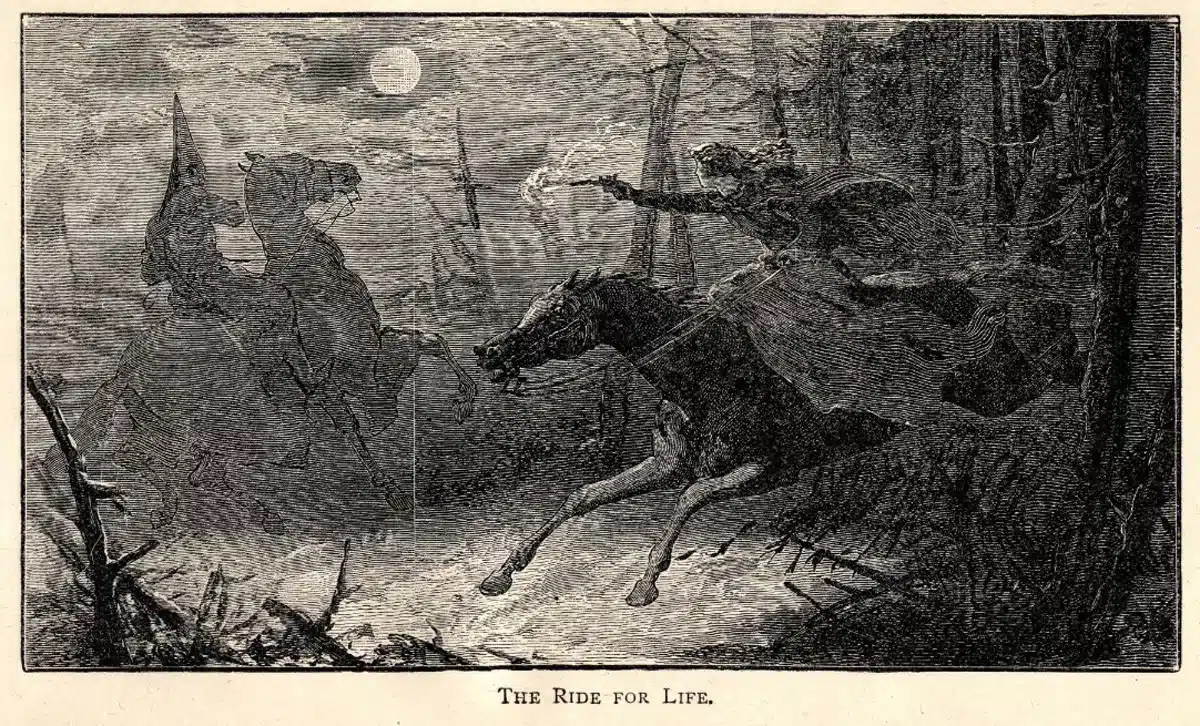
Early Klansmen and white vigilantes usually arrived at homes of Black victims and their white supporters by horseback. This 1880 drawing is from a book by Albion Winegar Tourgee, a “radical” white Tennessee judge who championed Black rights in the Reconstruction South, branding him branding him a “radical” enemy. Courtesy Tennessee State Library and Archives / Public Domain
When Ashton watched the video of Aldean performing those lyrics in front of the courthouse in Columbia, Tenn., Ashton knew to ask the next question, which we always try to do. Why that courthouse? And was it one of so many across the U.S. where one or more Black people were lynched to cheering white crowds?
Sponsor Message
Of course it was. The courthouse was the site of the 1927 lynching of 18-year-old Henry Choate—a Black man accused, but not convicted, of attacking a 16-year-old white girl (who said herself that she could not identify him as her attacker). That courthouse is also about 30 miles from here the Ku Klux Klan initially formed