

Tune into any news station, and you will hear the words “Breaking News” followed by phrases like “more violence” and “another tragedy.”
These terms have become so synonymous with commercial news that people, including me, do not bother to tune in. The Oxford Dictionary defines news as “newly received or noteworthy information, especially about recent or important events.” By this definition, news, in and of itself, is neutral—neither good nor bad. So why is the majority of the news we receive from commercial media bad?
I posed this question to a group of journalists and media executives in July 2023 at the Asian American Journalist Association Convention in Washington, D.C.
“When we typically engage in conversations about race,” I said, “it’s to prove a point or win an argument. It’s about ‘those people,’ ‘why do they always’ and ‘if they only.’ The rhetoric is immersed in fear and othering. Much of the reporting that is produced about communities of color is based on their trauma and deficits, instead of their joy and strengths.”
What racial healing circles provide are a safe and respectful space for people to be seen, heard and appreciated in their full humanity. People, especially those who perceive themselves to be different from each other, have an opportunity to share their stories, and find common, or perhaps even higher ground. When that happens, the outcomes are compassion, hope and belonging.
john a. powell is the director of the Othering & Belonging Institute at the University of California, Berkeley, a research institute that identifies and eliminates barriers to an inclusive, just, and sustainable society. Photo courtesy www.johnapowell.org
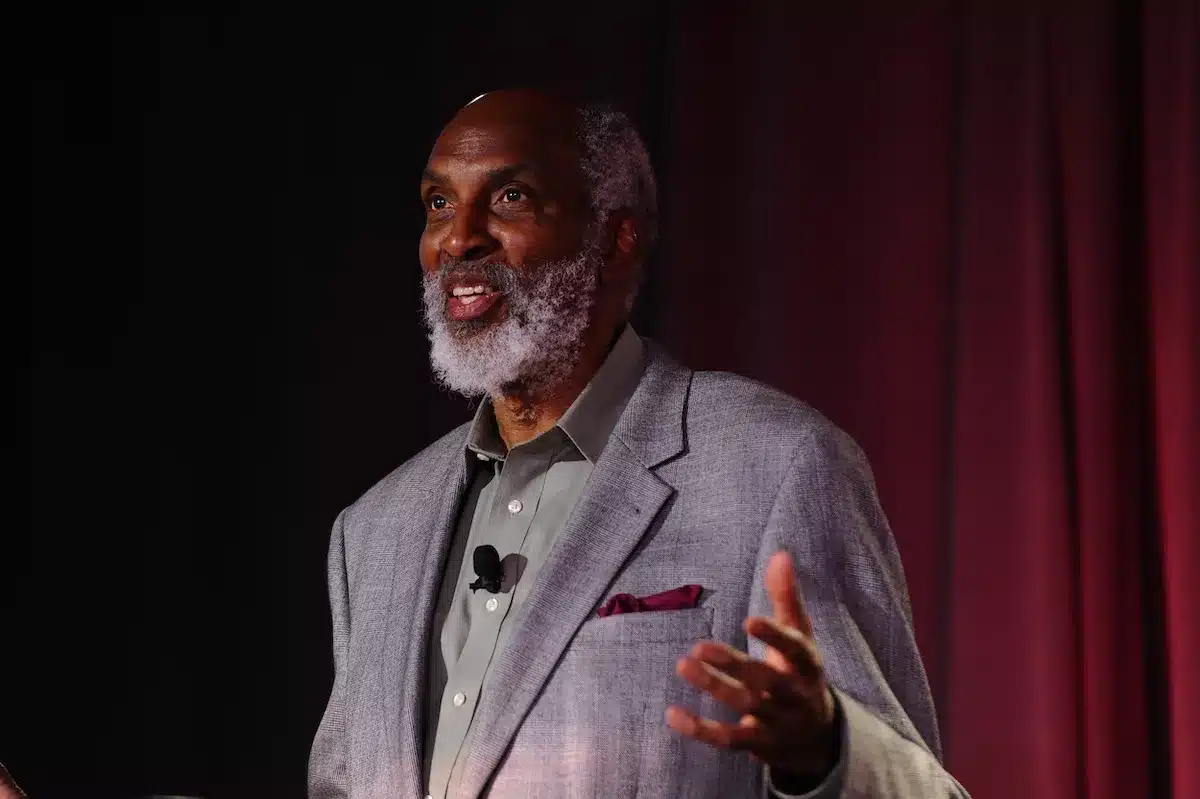
I shared john a. powell’s concept of Bridging: Toward a Society Built on Belonging and asked: What if every time you post a “Breaking News” headline, you balance it with a “Bridging News” headline?
Instead of “more violence” and “another tragedy,” we hear, “more healing” and “another celebration”?
That hit a chord with the audience as these journalists did what they did best—ask questions.
“How do you get people in the room?”
“What happens in a circle?”
“What do you mean