

JACKSON, Miss.—Jackson residents have long complained about the proliferation of used tires, dilapidated pieces of furniture and household trash like plastic grocery bags littered along the side of the road in some neighborhoods across the capital city.
But now there’s a renewed effort to address illegal dumping, City of Jackson Solid Waste Supervisor Lakesha Weathers told the Mississippi Free Press on April 24.
She couldn’t pinpoint why illegal dumping in Jackson has increased in recent years but said she believes a “change in mindset” and people taking advantage of the more desolate areas of the city has contributed to the issue.
“We’ve always had a little dumping. Every city has a little dumping,” Weathers said. “It used to be where people would dump on those dark, back roads. Now, they dump everywhere. We’ve seen a significant increase.”
Weathers said it’s an issue across all seven of the city’s wards, but added that Ward Six and some areas of Ward Five are consistently the hardest hit.
Tires lay along the side of the road in the Pocahontas Heights neighborhood in North Jackson in April 2024. Photo by Shaunicy Muhammad
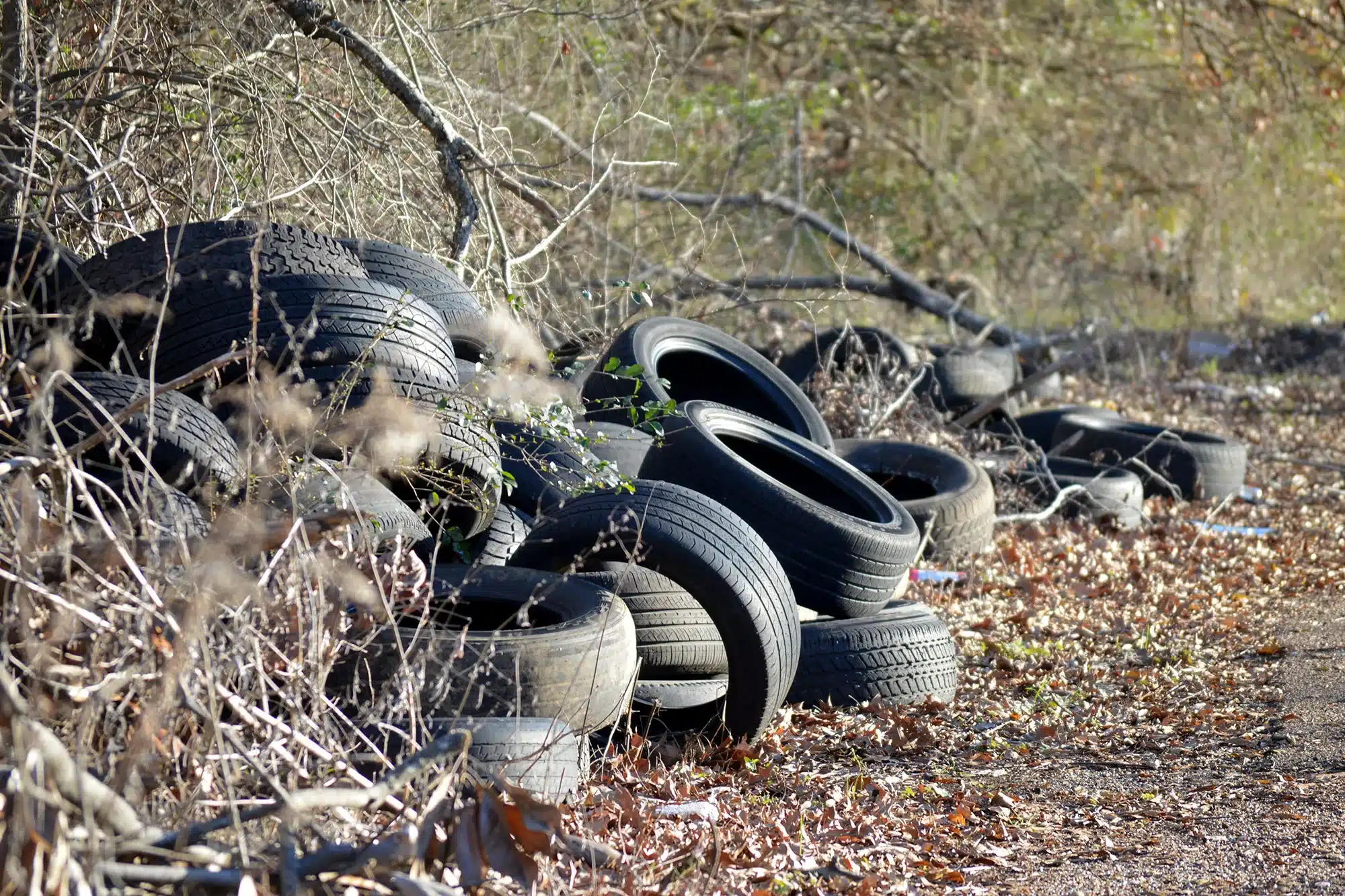
“People look for dark, unkempt roads,” she said. “One of our biggest (problem) areas in North Jackson is on Hilda Drive. That’s in a business community, you wouldn’t expect that. But Hilda is unlit and unkempt. In South Jackson, you have Glen Erin, that’s another street.”
“That’s what people are looking for. They’re looking for those streets that people rarely travel and turn them into dump sites,” Weathers said.
‘A General Safety Hazard’
The prevalence of illegal dumping can have negative effects on the environment and quality of life for residents, Mississippi Department of Environmental Quality Waste Division Director Trent Jones said in a statement to the Mississippi Free Press in February.
“Larger dumps can potentially interfere with drainage and contribute to localized flooding. Waste materials that enter state waters (including surface waters or groundwaters) can negatively impact water quality for humans, wildlife, and aquatic species,” he said.
“Illegal dumps can also be a general safety hazard and contribute to a variety