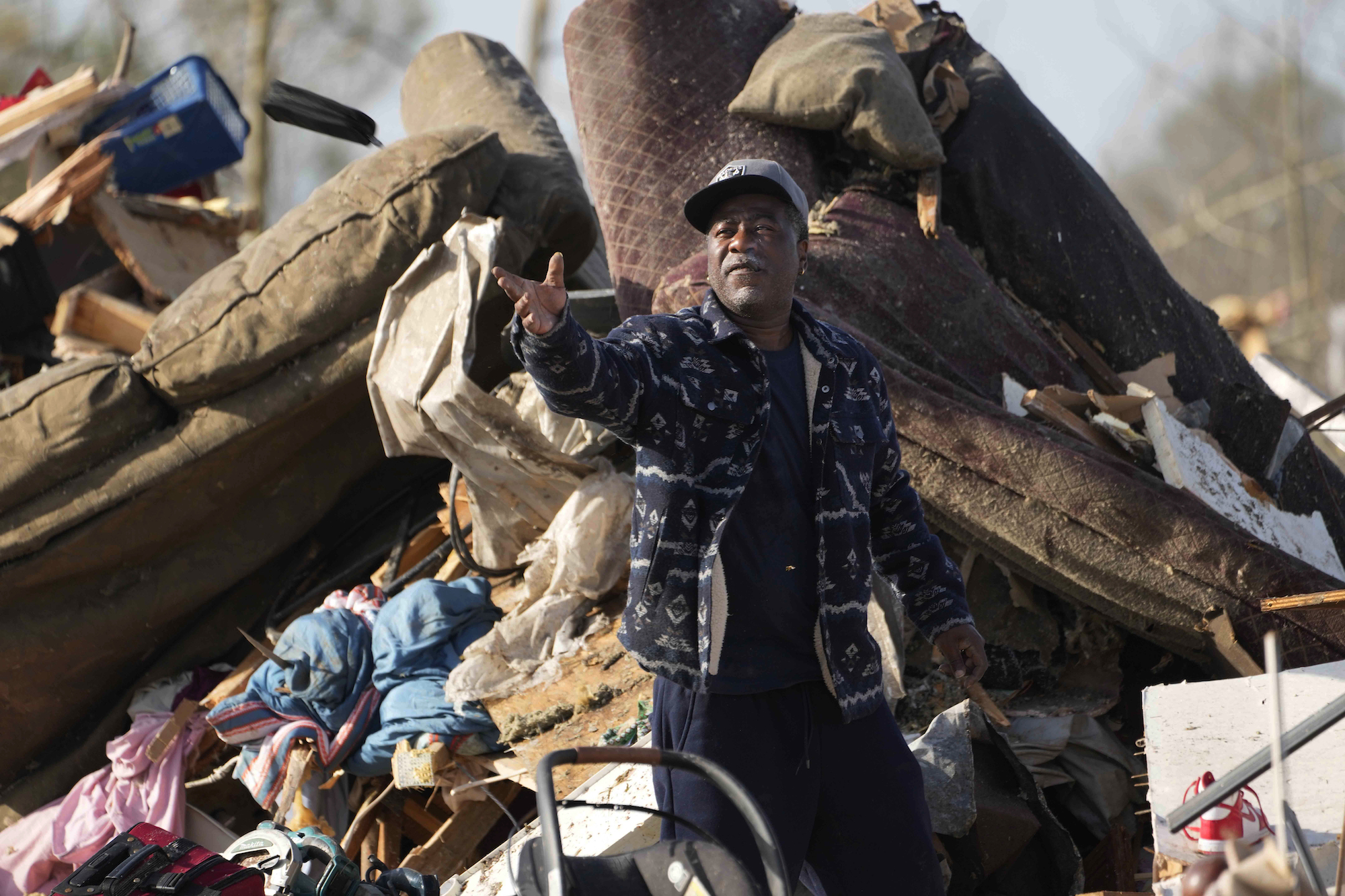
About 250 survivors of the deadly tornadoes that swept through Mississippi on March 24 are now eligible for direct housing assistance through FEMA, State officials announced Monday.
The affected residents are located in Carroll, Humphreys, Monroe, Montgomery, Panola and Sharkey counties. FEMA will provide eligible applicants with transportable temporary housing units “and other forms of housing for residents displaced due to the March 24th tornadoes,” Gov. Tate Reeves’ press office said in an announcement yesterday.
“This is a temporary housing solution while residents navigate the rebuild(ing) of their home,” Mississippi Emergency Management Agency Executive Director Stephen McCraney said in a statement with the governor Monday. “A long-term housing solution for survivors will take time and effort. Survivors are asked to be patient and consider all avenues when determining what will be best for each family moving forward.”
The announcement said tornado survivors who have already applied for FEMA assistance do not need to reapply to receive direct housing assistance. “FEMA will contact the survivor if they are eligible for direct housing assistance,” the press release continued. “FEMA will NOT ask for any money. Residents who qualify for direct housing can live in the temporary housing units for up to 18 months.”
Sponsor Message
The March 24 tornadoes killed 26 people and left at least 170 injured while damaging or destroying thousands of homes and other structures.
Samaritan’s Purse, a North Carolina-based evangelical Christian humanitarian aid organization, is also offering to help residents who had a “mobile home or single-family home” that “was destroyed by the tornadoes and was uninsured or under-insured” with its mobile home replacement program, the announcement said.
“We are extremely grateful to Samaritan’s Purse for assisting citizens with their housing needs. We cannot thank them enough,” MEMA State Coordinating Officer Todd DeMuth said in the statement. “However, not every survivor will qualify for direct housing or meet Samaritan’s Purse criteria. We’ve identified a new task force to assist those residents and bridge the gap in recovery. These solutions won’t make the survivor whole, but it will get them in the right step in returning to normalcy.”